A Proven Model for Developing
Biblically Competent, Christlike Leaders
for Churches Worldwide
Paul Hemming and Joseph W. Handley, Jr.
Published in Global Missiology, www.globalmissiology.org, July 2026
Abstract
This article evaluates Competency-Based Theological Education (CBTE) through Re-Forma’s outcomes-based model to address the global pastor training crisis. Drawing on 2025 qualitative research of 14 Kenyan facilitators, the study demonstrates how implementing Re-Forma’s 37 Outcomes establishes a rigorous, contextually flexible standard for assessing competence for biblical ministry. The findings show that this mentor-driven approach integrates head, heart, and hands to foster Christlike character, counter prosperity theology, and unite independent “Roho” congregations. Additionally, this standard satisfies government registration criteria, presenting a scalable pathway to equip reliable, qualified global leaders.
Keywords: Christlike leadership development, Competency-Based Theological Education (CBTE), Kenyan context, non-formal theological education, Re-Forma Outcomes
Introduction
Across many parts of Africa, it is not uncommon on any given Sunday for pastors to step into the pulpit and preach with little or no formal theological education (Hemming, 2026). This reality is vividly seen in the heart of Kenya, on the shores of Lake Victoria, where a humble “Roho” (Swahili for “Spirit”) church— one of the numerous so-called African Independent Churches often shunned by mainstream denominations—stands under the leadership of Father Peter. For two decades, Father Peter led his people faithfully, yet without formal theological education or government recognition. His congregation, often seen as “too African” by traditional institutions, remained vulnerable to both regulatory pressure and doctrinal instability.
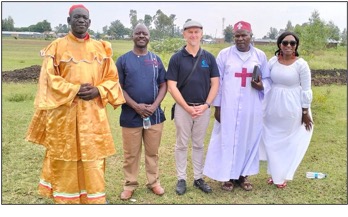
(left to right) Father Peter Orono, Bishop James Achola (facilitator), Paul Hemming (Re-Forma Director for Africa), Cardinal Joel Odero, and Maggie Gichuki (Re-Forma National Coordinator) in front of New Alfa Church, Kisumu
In such “Roho” churches, leaders are among those most in need of theological training. They are often excluded from mainstream programmes and left without the credentials needed to secure their congregations’ legitimacy. Through Re‑Forma’s outcomes‑based programme (Re-Forma, 2026a), Father Peter and ten of his leaders graduated with certificates that carried credibility—enough to register their church with the Kenyan government. This breakthrough brought both legal protection and newfound doctrinal stability.
The impact did not stop at mere administrative success. Father Peter’s ministry multiplied, new congregations were established, and servant leadership flourished. Women were empowered to lead and preach, and the congregation learned to discern truth from error. In a context marked by regulatory pressure, the so-called “prosperity gospel,” abuse of spiritual authority, false teaching, and barriers to ministry training, Re‑Forma’s outcomes‑based model is reshaping ministry from the ground up. This story of one Roho church’s transformation serves as an entry point into the broader themes of this article.
Yet Father Peter’s story is not unique. It represents a microcosm of a much larger challenge: the global leadership gap in churches around the world. Studies estimate that millions of pastors worldwide serve without adequate training, leaving congregations vulnerable and ministries under‑resourced. According to the Center for the Study of Global Christianity, while there are approximately five million Christian clergy worldwide, only about 5% possess formal theological training (Center for the Study of Global Christianity, 2024). Michael Ortiz, Executive Director of the International Council for Evangelical Theological Education (ICETE), observes that this lack of training coincides with a colossal imbalance: while some Western nations have one trained pastor for every few hundred people, parts of the Majority World have only one for every 450,000 (Ortiz, 2023). This disparity has been famously illustrated by Rev. Steven Loots, founder of Harvesters Ministries, who notes that church planting is currently moving at the speed of a “bullet train,” while leadership development follows on a “bicycle” (Handley, 2022). The 2024 Lausanne Congress, held in Seoul-Incheon, South Korea, identified this disparity as one of the most urgent gaps facing the global church, calling for Christlike leaders whose integrity matches their competence (Lausanne Movement, 2024b).
The urgency of this challenge is difficult to overstate. Across much of the Majority World, the growth of the Church has far outpaced the capacity to develop well-equipped leaders. Thousands of pastors and ministry leaders faithfully serve growing congregations with little or no opportunity for sustained biblical and theological training. While residential seminaries remain indispensable for many, they alone cannot meet either the scale or the diversity of today's leadership development needs. This reality calls for complementary approaches that are both biblically faithful and contextually accessible, enabling leaders to be equipped where they live and serve while remaining deeply engaged in the life and mission of the local church.
Against this backdrop, the experience of Re-Forma—a ministry that has established the first-ever, global standard for non-formal, biblical ministry—in Kenya should be understood within a much broader conversation taking place across global theological education. As the centre of Christianity continues to shift toward the Majority World, there is growing recognition that no single educational model can adequately meet the scale and diversity of leadership development needs. Rather than asking which model is best, the more strategic question is how formal, non-formal, and informal approaches can complement one another in equipping the next generation of biblically competent, Christlike leaders (Handley, 2026). Increasingly, theological educators are exploring how these approaches can work together, each contributing unique strengths to leadership formation. Recent conversations within ICETE and related global networks reflect this growing consensus, emphasising collaboration rather than competition between educational models. The Re-Forma experience in Kenya offers one practical example of how this collaborative vision can be implemented in a specific context while remaining deeply rooted in biblical formation, contextual relevance, and ministry effectiveness. The Kenyan experience presented here is not intended as a universal template, but as a contextual case study that illustrates how these principles can be applied within one Majority World setting.
The biblical mandate for leaders, particularly in 2 Timothy 2, underscores the dual emphasis on Christlike character and ministry competence. This article explores how Re‑Forma’s outcomes‑based programme is deeply rooted within a Competency‑Based Theological Education (CBTE) framework, ensuring that ministry leaders are not only theologically equipped but also growing as Christlike leaders and shepherds of their congregations. In addition, the article’s underlying research offers a lens through which we can understand how CBTE principles are realised in diverse ministry settings. By drawing on a detailed case study of Re‑Forma’s training efforts in Kenya, the article explores how the holistic goals of CBTE—unifying theological knowledge with character and competence—are being realised in real-world ministry contexts.
The Biblical Basis: Reclaiming the Apostolic Model for Formation
Addressing the contemporary leadership gap, requires a recovery of the biblical framework for ministerial formation. This article contends that 2 Timothy 2 provides this framework, offering perhaps the most explicit mandate and model for ministry training in the New Testament. Written as a “passing of the torch” from the Apostle Paul to his protégé Timothy, the chapter functions as a manual for ensuring the continuity of the gospel through the intentional formation of its leaders. Paul’s primary concern here is not merely the survival of a message but the formation of the minister. He presents a blueprint for a holistic ministerial identity—one where the integrity of the leader is the primary safeguard for the truth they proclaim.
This apostolic pattern is not a Pauline innovation but a direct continuation of the apprenticeship of the Twelve. As recorded in Mark 3:14, Jesus appointed the Apostles “that they might be with him and that he might send them out to preach.” This prototypical model formed their head through teaching, their heart by walking together daily, and their hands through real-world ministry practice. Paul’s instruction to Timothy simply codifies this holistic apprenticeship into a reproducible manual, ensuring that ministerial formation remains relational, observable, and multiplicative.
This pattern is anchored in the succession of entrustment described in 2 Timothy 2:2. Paul instructs Timothy to entrust the gospel to “reliable (pistos) people who will also be qualified (hikanoi) to teach others.” This verse outlines an “apostolic succession” of truth, where the gospel is preserved through the quality of the successors. An exegetical examination of these terms reveals them to be the essential poles of a mature minister of Christ. Pistos (reliability) represents the “heart” orientation: a Christlike character tested and found faithful in the service of the gospel. In the Pastoral Epistles, this reliability refers to a faithfulness that is both a gift of grace and a requirement for service. Such faithfulness is inextricably linked to hikanoi, the functional “competence” or “ability” required for the task. Together, pistos and hikanoi form the biblical basis for the triad of formation: head (biblical knowledge), heart (Christlike character), and hands (ministry skill).
The broader context of the chapter demonstrates that ministry competence is a lived reality developed in ministry experience. Paul’s metaphors of the soldier, the athlete, and the farmer (vv. 3–6) illustrate that character and competence are developed through discipline, adherence to the requirements of the calling, and hardworking patience. Philip Towner points out that in these verses there is a “shift in the didactic strategy from an emphasis on models to instruction with maxims and specific commands,” emphasising that these metaphors underscore the rigorous, integrated nature of the ministerial calling (Towner, 2006). These images remind the reader that ministry is a demanding labour requiring an integrated life of discipline. They represent a holistic ministerial identity where the leader’s heart provides the essential foundation for their head and hands to remain effective in service.
Furthermore, Paul’s exhortation to “correctly handle the word of truth” (v. 15) while avoiding “godless chatter” (v. 16) confirms that biblical knowledge serves as a moral guardrail. The “workman who does not need to be ashamed” is one whose academic head and ethical heart are in alignment. Paul’s vision culminates in the “vessel for honour” (v. 21)—one who is cleansed, useful to the Master, and prepared for every good work.
This biblical vision of integrated formation—where character (pistos) undergirds competence (hikanoi)—directly informs the Lausanne Movement call for more biblically formed leaders at Seoul 2024. The Congress and its Seoul Statement emphasised that Christlike leaders are formed not through information transfer alone but through relational discipleship and accountable ministry practice, mirroring Paul’s charge to Timothy (Lausanne Movement, 2024a). The critical insight from this biblical foundation is the formational unity of pistos and hikanoi. In the apostolic model, character and competence were never intended to be developed in isolation. Reclaiming these priorities requires a move toward a system that treats Christlike character and biblical skill as the inseparable evidence of ministerial integrity. By reuniting what has often been separated in modern education, the Church can develop leaders who possess the competence required to navigate the challenges of ministry around the world.
Personal Mentoring: How CBTE Facilitates Holistic Formation
If the apostolic model focuses on the integrated dimensions of ministry training—head, heart, and hands—then the method of formation must move beyond the passivity of traditional “information transfer.” The primary strength of Competency-Based Theological Education (CBTE) is its ability to facilitate this integrated leadership growth through a process of mentoring based on appropriate competencies. Stuart Sheehan notes that this “redemptive approach” empowers new leaders by removing traditional barriers of proximity, time, and academic qualification, relocating the learning to the student’s own context (Sheehan, 2023).
CBTE represents a fundamental reimagining of ministerial preparation and indeed a strategic necessity for the global mission (Barron, 2024). The “new tools” of CBTE provide a way to offer rigorous training outside traditional structures, while others argue that this competency paradigm is uniquely suited for intercultural contexts because it prioritises demonstrated ministry outcomes over Western academic inputs (Naylor et al., 2024). Furthermore, the analysis of micro-credentials provides a necessary pragmatic toolkit for how these outcomes can be validated across disparate ministry sectors (Barron, 2024). The research underpinning this article builds upon these discussions by demonstrating that CBTE shifts the focus from accumulated “seat time” in a classroom to the demonstrated mastery of these three dimensions—head, heart, and hands—within a relational context.
The effectiveness of the CBTE model lies in the active involvement of personal mentors facilitating a learning process, whereby the learner develops mastery in holistic ministry competencies. Anderson and Henson define CBTE as an approach where formation is “shaped by the recognition that the act of knowing requires the integration of content, character, and craft, and evaluated in the context of team-based mentoring” (Anderson & Henson, 2024). In traditional academic settings, the head is often developed in isolation on a campus, while the heart and hands are left to be developed later. CBTE collapses this distance by utilising backward design: identifying the appropriate competencies required for the relevant ministry and embedding the learning process directly within the life of the local church through a mentor-protégé relationship.
A further strength of the CBTE approach is that quality assurance is embedded within the formation process itself rather than treated as a separate evaluative exercise. Clearly defined competencies, intentional facilitator mentoring, and demonstration-based assessment work together to ensure that learners are evaluated not simply on knowledge acquired but on demonstrated growth in biblical understanding, ministry competence, and Christlike character. In this way, assessment becomes an integral part of formation rather than merely a measure of academic achievement.
One of the distinctive strengths of CBTE is not simply its holistic approach to formation, but its ability to preserve fidelity to desired ministry outcomes while allowing contextual flexibility in how those outcomes are achieved and assessed. The competencies themselves provide a stable framework for biblical and ministry formation, while facilitators retain the freedom to adapt learning activities, mentoring relationships, and assessment methods to the realities of their local context. This combination of theological integrity and contextual adaptability makes the model particularly well suited for leadership development across diverse cultural settings.
In this mentoring framework, formation is achieved through three distinct areas of effectiveness:
· Real-time observation of the heart: Because the student remains in their ministry context, the facilitator—acting as a personal mentor—does not have to guess at the learner's character. They observe it in the way the learner handles conflict, treats their family, and manages church resources. Learner progression is marked by the observable demonstration of integrated knowing rather than by time, input, or curricular stages (Anderson & Henson, 2024). Such integrated competencies can only be verified in a demonstration-based, rather than a time-based, model.
· Contextual relevance for the hands: Mentoring allows ministry skills to be developed in the specific environment where the leader will serve. This arrangement removes the “translation gap” often found when students return from a distant seminary and struggle to apply abstract concepts to local realities.
· Accountability for the head: In a mentoring model, biblical knowledge is not acquired for its own sake but is immediately applied to the challenges of ministry and leadership. This observed application creates a feedback loop where the Word of Truth is “correctly handled” (2 Tim 2:15) because it is being tested in ministry (or ministry-simulated environments) alongside a mentor.
Such mentoring-driven formation echoes the Lausanne Congress’s so-called GAP 18 (“Developing Leaders of Character”) emphasis on structured, relational programmes that pair emerging leaders with mentors for character development, skill-building, and mutual accountability (Lausanne Movement, 2024c). By keeping learning in the local church context, CBTE operationalises Lausanne’s vision of Christlike leaders who are formed in ministry rather than extracted from it.
By reuniting these head-heart-hands dimensions through appropriately identified competencies, CBTE provides a streamlined and biblically faithful pathway for the succession of ministry entrustment. It ensures that the formation of the minister remains holistic, verifying that the leader who emerges from the training has achieved the identified ministry readiness—possessing both the pistos and hikanoi required for their ministry context.
Implementing the Model: Kairos, Re-Forma, and the Global CBTE Movement
Steve Hardy observes that the future of theological education hinges on its ability to be both accessible and accountable—ensuring “quality” even in non-formal settings (Hardy, 2022). To ensure both accessibility and accountability, the CBTE movement has developed delivery systems that maintain accountability through relational and institutional guardrails. These measures are visible in both the formal academic sector, through institutions like Kairos University, and the non-formal sector, primarily through Re-Forma.
In the formal sector, Kairos University has pioneered a model that moves away from a fixed curriculum toward a student-centred approach driven by a mentor team. Here, identified ministry readiness is achieved by placing the student at the centre of a three-person team comprising a faculty member, a vocational mentor, and a personal mentor. Progression is not determined by credit hours but by the team's collective verification of mastery in holistic competencies, guided by proficiency indicators.
On the non-formal side, Re-Forma provides a global standard specifically designed for the “untrained millions” who may never have access to formal degree programmes. The Re-Forma model is built upon 37 Outcomes that define the essential “head, heart, and hands” of a minister (Re-Forma, 2020; Hemming, 2024). The 37 Outcomes are organised into four ministry-related categories; namely, Leading like Jesus, Handling the Word, Reaching and Making Disciples, and Shepherding God’s People (Re-Forma, 2026b). The implementation of Re-Forma relies on three primary mechanisms of accountability to ensure that these outcomes are more than a mere checklist.
First, the model is implemented through the facilitator. Unlike the broader team approach of Kairos, Re-Forma relies on the facilitator to serve as the primary personal mentor to a local training group. This relational proximity is the engine of quality control; the facilitator verifies not just biblical knowledge but also the demonstration of Christlike character and ministry skills within the learner’s local context. Because the facilitator is usually a local church leader, the assessment is based on long-term observation rather than a single examination.
Crucially, this assessment is an ongoing, formative process rather than a summative test. For each of the 37 Outcomes, the learner must provide evidence of mastery, which the facilitator evaluates through oral interviews, written reports, observed ministry practice, and feedback from the local congregation. To equip facilitators, and to standardise assessment globally, Re-Forma provides assessment guidelines. In this way, assessment is strengthened by being based on objective standards and implemented in the context of relationship.
Second, Re-Forma utilises a decentralised verification system. To maintain the integrity of the standard across diverse global contexts, local groups are overseen by National Coordinators. These coordinators (along with office staff) provide a layer of external accountability by conducting “spot-check” phone calls with the students before any certificates are issued.
Third, the World Evangelical Alliance (WEA) provides a global endorsement that acts as a benchmark for credibility. As the underlying research notes, this global standard allows local, non-formal training to gain a level of institutional validity previously available only to those within the formal seminary system.
By integrating these mechanisms, Re-Forma ensures that quality is measured by the actual life and competence of the minister. These built-in relational and institutional guardrails fulfill the Lausanne call for collaborative, verifiable pathways that equip “reliable and qualified” leaders who can serve within diverse global contexts.
The Kenyan Story: Evidence of Holistic Transformation
To evaluate the effectiveness of the Re-Forma model, a series of in-depth qualitative interviews was conducted in 2025. The study focused on 14 facilitators stationed primarily in the bustling urban hub of Nairobi and the vibrant communities surrounding Kisumu, on the shores of Lake Victoria. These Kenyan training groups were chosen because they represent the pulse of the global leadership gap—where the rapid growth of the Church often outpaces the availability of formal training. The research was designed to be deeply communal: before the interviews, facilitators first engaged in their own “listening tours” with their students, as well as with the students' families, church members, and local communities. These diverse interviews ensured the data was not merely a self-report from a student, but a rich tapestry of testimonies reflecting tangible change in the home and ministry environment.
What makes the Kenyan experience particularly significant is that the observations shared by participants were not based solely on programme intentions but are supported by qualitative research with facilitators directly involved in the training process. Participants consistently described growth across the integrated dimensions of biblical understanding, ministry practice, and Christlike character, while also pointing to observable changes within their churches and communities. Rather than presenting isolated success stories, the findings suggest that holistic formation can be intentionally cultivated and recognised within local ministry contexts.
The empirical outcomes in Kenya demonstrate a practical outworking of Lausanne’s GAP 18 objectives: character formation that moves beyond religious performance into the home and community, doctrinal clarity that counters syncretism and prosperity theology, and multiplied leadership that breaks down denominational walls. By producing observable Christ-like maturity alongside ministry competence, the Re-Forma model offers churches and leadership-training ministries around the world a scalable pathway toward the “Christlike leaders for every church and sector” that Lausanne envisions.
Through the semi-structured interviews mentioned above, a “saturation point” was reached in the feedback and testimonies being shared, offering compelling evidence of transformation. By transcribing and coding the various narratives that were obtained, the researcher was able to move beyond anecdotal evidence to identifying a clear, thematic roadmap of change. This rigorous thematic analysis revealed that the transformation was not isolated; it was a predictable outcome of integrating head, heart, and hands.
The student body concerning whom the interviews were conducted represented a broad and varied demographic. Student training groups typically ranged from 20 to 30 students, though several facilitators trained over 200 learners across multiple cycles. Participants spanned from late teens to mid-fifties, with an aggregated gender balance of 62% men and 38% women. Crucially, over 70% of the students were already serving as pastors or lay leaders, confirming the high demand for validation among the undertrained. Attrition of students, going through the outcomes-based programme, was remarkably low at only 8%, despite challenges in technology and distance. Facilitators adapted to varying literacy levels through oral methods, often instructing in Kiswahili or vernaculars like Luo, Kikuyu, and Kalenjin.
Two findings surprised the researcher most during the fieldwork. First, groups demonstrated a sophisticated ability to contextualise the Outcomes without altering their intent. For example, they reframed biblical symbols to correct syncretistic beliefs, clarifying that a dove represents the Holy Spirit rather than being the Spirit itself. Second was the seamless integration of the head, heart, and hands dimensions, where learners lived out the Bible’s teaching. The research revealed an impact in several spheres:
· The Personal Sphere: Character and Relational Maturity:
The primary shift in this sphere was a development of Christlike character that moved beyond religious performance into the home. Facilitators documented pastors reconciling with wives after years of separation. One facilitator remarked: “The fruit of the Spirit outcome shook people... they saw outcomes requiring character, not just knowledge.” This observation was verified by a spouse who observed: “He was the one doing the dishes—it’s not what he usually does.” Relational maturity was further evidenced in conflict resolution: “Initially, they would run away from conflict, but now they use the word of God to bring people together.”
· The Ministerial Sphere: Doctrinal Clarity and Administrative Integrity:
Beyond the impact of improved handling of the Word, the Re-Forma training had forced a renunciation of false teachings. Pastors moved from random scripture selection to expository preaching, with one facilitator noting: “Members were commenting that ‘our pastor has changed, the way he is teaching us and handling the Bible is quite different’—they could see the depth and the flow in the sermons.” This shift directly countered “prosperity gospel” rhetoric. Furthermore, the hands dimension triggered a breakthrough in administrative integrity; pastors began keeping transparent records and finances. As one facilitator explained: “Requiring participants to demonstrate [administrative competence] really drove the point home.”
· The Ecclesiastical and Communal Spheres: Unity and Empowerment
The CBTE training shifted churches from “one-man shows” to “multiplied leadership.” In one church, a youth gathering grew from 20 to over 160 attendees because the leader was finally equipped. One facilitator observed: “The training broke down denominational walls... rival ministries began forming fellowships.” This ecclesiastical shift also saw the empowerment of women and children. The impact extended into the community through social action, such as caring for widows and orphans, and in one session over 70 people came to faith during an hour of practical fieldwork.
The Kenyan experience also demonstrates that faithful implementation does not require rigid uniformity. While the desired competencies remain constant, facilitators regularly adapted learning activities and assessment practices to local languages, educational backgrounds, ministry settings, and available resources without compromising the intended outcomes. This balance between fidelity to core competencies and flexibility in contextual implementation helps explain why Re-Forma’s programme has proven both credible and accessible across diverse ministry environments.
The evidence from Kenya suggests that holistic leader formation produces effects that extend well beyond individual participants. As leaders grow in biblical competence, ministry effectiveness, and Christlike character, the benefits are reflected in healthier congregations, stronger local leadership, and a more credible Christian witness within surrounding communities. While this case study is rooted in one East African context, it illustrates how intentional, holistic formation can contribute to the strengthening of the Church more broadly.
Discussion and Implications: A Path Forward for the Global Church
The empirical findings from Kenya demonstrate that the perceived “gap” between academic knowledge and ministerial character is not an inevitability, but a result of a pedagogical disconnect. Ashish Chrispal asks, “Which way for theological education?” in arguing that the future depends on models that bridge the gap between academic theory and ecclesial practice (Chrispal, 2022). When training is relocated to the crucible of the local church and anchored in appropriately identified competencies and mentoring, the result is a well-rounded ministry readiness.
The first implication of the Kenyan case study concerns the Recognition of Prior Learning (RPL) (Hemming, 2026). For too long, the theological academy has operated as a closed system. However, the success of the Re-Forma model suggests that appropriately identified competencies can serve as a universal benchmark. A pastor’s demonstrated mastery of the 37 Outcomes—verified by a facilitator-mentor—should serve as a legitimate bridge to further formal education. This “stackable” approach allows a leader to move from non-formal validation to formal degrees without repeating the formation they have already mastered in the “marketplace” of ministry.
Second, the Kenyan study highlights the potential for alignment with Technical and Vocational Education and Training (TVET) standards (Hemming, 2026). By framing ministry training through the lens of “vocation” and “competence,” churches can utilise national educational frameworks to gain broader social and legal credibility. The practical value of gaining such credibility was clearly evidenced in the Kenyan research, where the Roho church pastor mentioned earlier, Father Peter, reported that his church registration was officially approved by the Registrar of Societies after he presented his Re-Forma certificate. Far from being an isolated stroke of fortune, the experience of leaders like Father Peter demonstrates that integrating non-formal CBTE models with national standards offers a repeatable, legally protected pathway for thousands of independent congregations facing regulatory scrutiny.
Conclusion
Ultimately, the crisis of the “untrained millions” requires more than the expansion of information transfer; it demands a recovery of the apostolic model of formation. As the 2024 Lausanne Congress underscored in its GAP 18 on “Developing Leaders of Character,” the future of the global church depends on leaders whose integrity matches their competence (Lausanne Movement, 2024c). This vision calls for mentoring‑driven pathways that unite Christlike character with ministry skills.
The Kenyan case study demonstrates that the vision is not theoretical but lived reality. By reuniting head, heart, and hands, pastors and facilitators are embodying observable transformation—families reconciled, prosperity teaching renounced, doctrinal clarity deepened, servant leadership multiplied, and churches strengthened. These outcomes show that CBTE is not merely a theoretical model but a proven one, producing leaders who are demonstrably “reliable and qualified” (2 Tim 2:2).
Kenya provides a microcosm of the wider challenge: rapid growth, multilingual ministry, bivocational pastors, and denominational fragmentation. At the same time, Kenya provides a wider solution. Recognition pathways such as RPL, TVET, and Registrar of Societies approvals show that non‑formal CBTE models can bridge into formal systems, securing both institutional credibility and ministry effectiveness.
For the “bicycle” of leadership development to catch up with the “bullet train” of church-planting, churches and leadership-training ministries around the world must embrace proven, contextualised CBTE models. A more widespread operationalising of the apostolic mandate for leadership training through mentoring, outcomes, and accountability will ensure that the next generation of leaders will be not only informed but truly formed: biblically competent, Christlike in character, and ready to shepherd the people of God into the future.
References
Anderson, K. C., & Henson, G. J. (2024). Theological education: Principles and practices of a competency-based approach. Kregel Academic.
Barron, B. (2024). CBTE and micro-credentials: New tools for theological education. Evangelical Review of Theology, 48(2), pp. 101–111.
Center for the Study of Global Christianity. (2024). Global Christianity, 1970–2025: As the center of gravity shifts, what’s next? Gordon-Conwell Theological Seminary.
Chrispal, A. (2022). Theological education: Which way? In R. van Rensburg et al. (Eds.), “Be focused... use common sense... overcome excuses and stupidity...”: Essays on holistic biblical ministries; Festschrift in honor of Dr. Manfred Waldemar Kohl. World of Theology Series, Vol. 22 (pp. 177–184). Wipf & Stock.
Handley, J. W., Jr. (2022). A Galilean movement: For such a time as this. In R. van Rensburg et al. (Eds.), “Be focused … use common sense … overcome excuses and stupidity …”: Essays on holistic biblical ministries; Festschrift in honor of Dr. Manfred Waldemar Kohl. World of Theology Series, Vol. 22 (pp. 137-150). Wipf & Stock.
Handley, J. W., Jr. (2026). Collaboration: Accelerating formal and non-formal pastor training. In L. Saunders, G. Mathias, & E. Smither (Eds.), Equipping for global mission (EMS Series No. 2, pp. 211–222). William Carey Publishing.
Hardy, S. (2022). Affirming quality in theological education. In R. van Rensburg et al. (Eds.), “Be focused … use common sense … overcome excuses and stupidity …”: Essays on holistic biblical ministries; Festschrift in honor of Dr. Manfred Waldemar Kohl. World of Theology Series, Vol. 22 (pp. 235–248). Wipf & Stock.
Hemming, P. (2024). Re-Forma's outcomes for biblical ministry get a fresh update. Theological News, 53(2), 1. https://theology.worldea.org/theological-news/
Hemming, P. (2026). Assessing the impact of competency-based theological education using Re-Forma's Programme for non-normal ministry training in Kenya (MTh thesis). South African Theological Seminary.
Lausanne Movement. (2024a). The Seoul Statement. Fourth International Congress on World Evangelization. Section I, “The Gospel: The Story We Live and Tell.” https://lausanne.org/statement/the-seoul-statement#i-the-gospel-the-story-we-live-and-tell
Lausanne Movement. (2024b). The Seoul Statement. Fourth International Congress on World Evangelization. Section III, “The Church: The People of God We Love and Build Up.” https://lausanne.org/statement/the-seoul-statement#iii-the-church-the-people-of-god-we-love-and-build-up
Lausanne Movement. (2024c). The Seoul Statement. Fourth International Congress on World Evangelization. “Discipleship: Our Calling to Holiness and Mission,” cf. GAP 18 Briefing.
Naylor, M., Jolley, K., & Rincón, A. (2024). A model of competency-based theological education for intercultural contexts. Evangelical Review of Theology, 48(2), pp. 112–125.
Ortiz, M. (2023, June 2). Theological education can’t catch up to global church growth. Christianity Today.
Re-Forma. (2020). Guidelines for best practice in non-formal theological education: The 37 outcomes. World Evangelical Alliance Theological Commission.
Re-Forma. (2026a). Re-Forma: Developing global ministry outcomes. Re-Forma. https://www.re-forma.global/
Re-Forma. (2026b). Re-Forma: Developing global ministry outcomes. Re-Forma. https://www.re-forma.global/outcomes
Sheehan, S. (2023). Thinking missionally in context about theological education: A case for a diversified and integrated approach [Paper presentation]. 4th Continental Gathering of Africa Baptist Theological Education Network.
Towner, P. H. (2006). The letters to Timothy and Titus. The New International Commentary on the New Testament. Eerdmans.