Turning Toward the Real Kingdom: A Critical Realist Account of “Turning” with Implications for Mission and Discipleship
S. Crawley
Published in Global Missiology, www.globalmissiology.org, October 2026
Abstract
Andrew Walls suggests that the gospel is fundamentally translatable across cultures. Drawing on historical analysis, he identifies “four convictions and responses” that he asserts are universally present across time and cultures where turning has taken place. This article explores a theological frontier by drawing on Walls, Critical Realism, the biblical narrative, and Lynne Taylor's theory of conversion to propose a universal account of “turning” that is translatable between cultures, suggesting important implications for missiology, cross-cultural engagement, evangelism and discipleship.
Keywords: contextualization, conversion, Critical Realism, evangelism, kingdom of God, missiology, relational authenticity, discipleship
Introduction
Who and what are ultimately significant in the turning process associated with conversion? What is universal and what is culturally particular? The answers to these questions have significant missiological implications for evangelism and discipleship.
As Andrew Walls surveys the history of the Christian movement, he states his belief that “we can discern a firm coherence underlying … the whole of historic Christianity” (Walls, 2025, p. 74). Walls’s reference to an underlying coherence independent of time, place, language, and culture arguably implies the possibility of an account of "turning" which is not confined to any individual culture and which is translatable across cultures.
The primary concern of this article is to offer such an account at the theological frontiers Walls refers to (2025, p. 60), in the hope of leading to more effective missiological engagement, levelling the playing field of theological legitimacy between Western and non-Western contributions (Walls, 2025, p. 60), and facilitating more meaningful dialogue between missiology and sociology to help “illuminate where and why the good news advances” (Watkins, 2026a, p. 28).
To develop this culturally transcendent and translatable account of “turning” I will draw on Walls, Critical Realism, the biblical narrative, and Lynne Taylor’s theory of conversion (Taylor, 2017; 2019; 2020; 2021).
It is important at the outset to acknowledge the irony of attempting to offer a universal account of conversion using Western-sourced theoretical constructs. Still, this study uses those constructs, since they are the ones available.
What is Walls pointing toward?
Walls affirms the universality and translatability of the gospel across time, geography, and culture, celebrating “the great adventure of Christian faith… always taking new shape as Christ enters new territory, as he takes flesh again in cultures where he has not walked in flesh before” (Walls, 2025, p. 32).
Conversion, according to Walls, is best understood as a “turning to Christ” of what is already there to a new centre, and he emphasises the distinction between a convert and a proselyte. He defines a proselyte as one who discards their old mental map for a new one—embracing someone else’s cultural map in the process—and a convert as one who retains their own mental map but turns, or reorients, their “entire social, cultural, religious inheritance toward Christ, opening them up to him” (Walls, 2025, p. 32). Walls’s portrays this “turning” as a long-term process that is both individual and communal (Walls, 2025, p. 75).
Walls speaks of the “infinite translatability” (Walls, 2025, p. 73) of the Christian faith into diverse cultures and an “underlying coherence” throughout its varied historical expressions (Walls, 2025, p. 74). At the same time, he acknowledges the difficulty of articulating this coherence and resists the tendency of many Western traditions to define conversion creedally or propositionally on the basis that creeds and propositions are also expressions of culture (Walls, 2025, p. 74). Instead, Walls suggests that four “convictions and responses” appear consistently across the ages amongst those who turn to Jesus:
1. The worship of the God of Israel.
2. The ultimate significance of Jesus of Nazareth.
3. That God is active where believers are.
4. That believers constitute a people of God transcending time and space (Walls, 2025, p. 74).
These convictions and responses constitute historically recurring outcomes of turning across varied cultures.
Critical Realism and Turning
Critical Realism is a philosophical framework that offers the necessary tools to propose a universal account of turning causes and process.
Critical Realism (CR) was proposed by Roy Bhaskar (Bhaskar, 1975; 1979). Bhaskar was concerned about shortcomings he saw in the natural sciences which he traced back to Hume and Kant, specifically “the epistemic fallacy” which conflated epistemology (what is known) with ontology (what is) (Bhaskar, 1975, pp. 26-35).
Bhaskar argued for the need to simultaneously affirm the existence of an objective reality (“realism”) and the limits of human ability to accurately perceive or know the full extent of that reality (“critical”). Here the discussion will concentrate on CR as it relates to social reality.
The usefulness of CR as a resource for theology and/or missiology has been recognised by sociologists, theologians, and evangelical scholars (Wright, 1993, pp. 45-49; Hiebert, 1999; Kraft, 2005; Taylor, 2020, p. 59), but CR’s potential in this regard is arguably yet to be fully developed. As such, the language and concepts that follow are based on those developed primarily with human persons and social activity in mind and may not be fully adequate to capture God’s singular and exceptional nature. However, they are still useful for the purposes of this discussion.
What follows is a brief outline of the CR framework and description of the four recurring outcomes that Walls has observed through a CR lens. Next will be a review of a theory of Christian conversion based on a CR framework.
CR Ontology
CR views social reality as comprising three domains: the empirical, the actual, and the real.
As depicted in Figure 1 below, the real domain (everything that is) includes the actual domain (everything that happens) and the empirical domain (everything that is experienced).
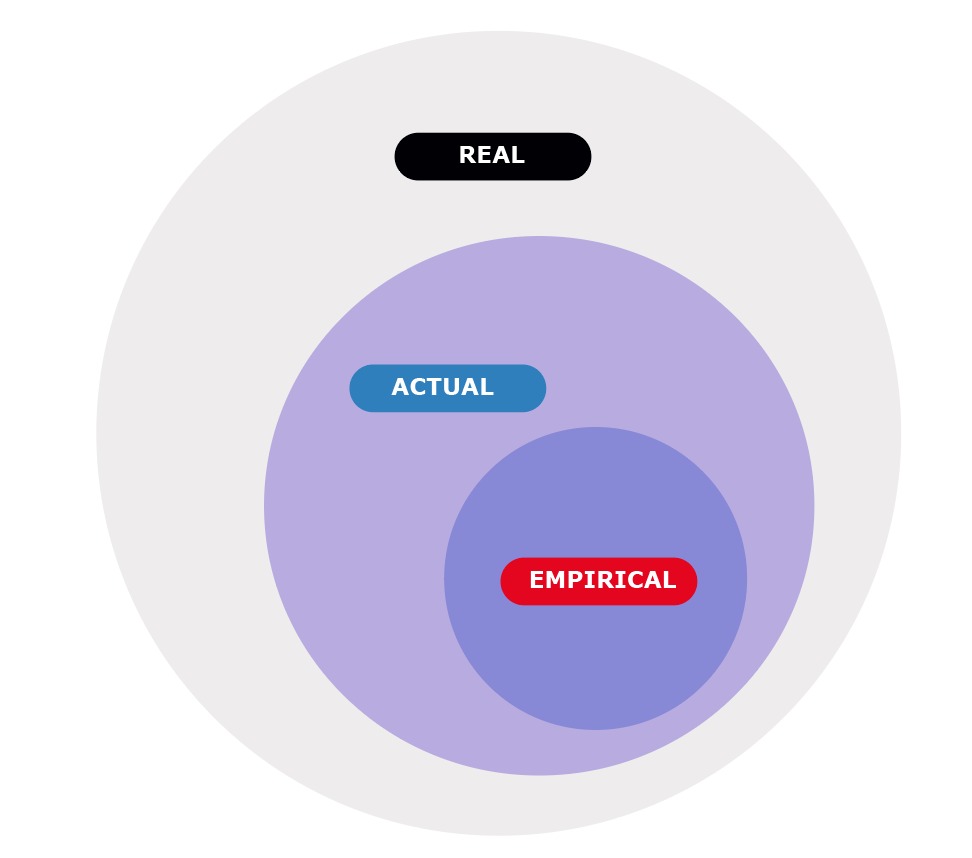
Fig 1. Three Domains of Critical Realism
The real domain is populated by social structures, agents, and mechanisms. Social structures are arrangements of people and resources, agents are capable of choice, and mechanisms are the powers through which structures and agents generate events and experiences when they are activated.
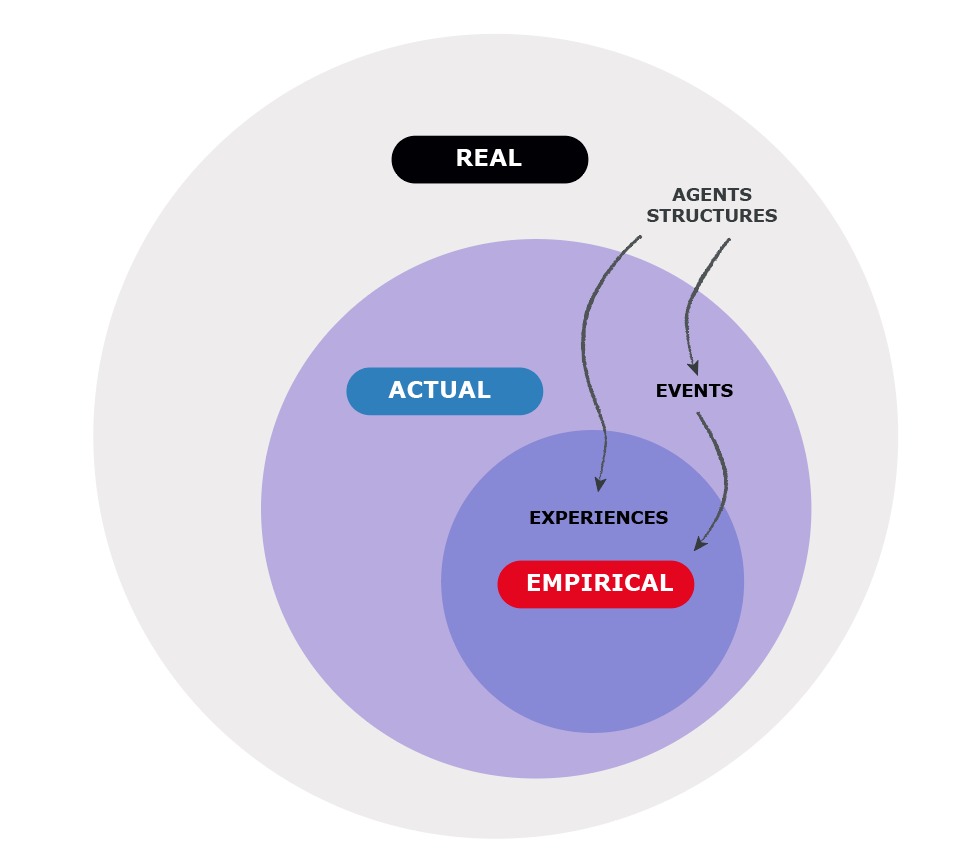
Fig 2. An Illustration of Interactions between the Three Domains of Critical Realism
Structures and agents have power to generate events through mechanisms, but whether or not they actually do depends on whether those powers are activated. Agents, structures, and events may be perceived and/or experienced in the empirical domain, or they may not.
CR Epistemology
A key feature of CR is the distinction between the transitive and intransitive dimensions of knowledge. The intransitive is what simply “is” and exists independently of human awareness or knowledge. The transitive dimension refers to human understanding and description of what is. Even in the empirical domain of human experiences and observations, interpretation is conditioned (and limited) by cultural location and perspective. People’s ability to accurately know the actual and real domains is even more limited.
For example, theology is the transitive human attempt to study, understand, and describe God within specific languages, cultures, and perspectives. God is the intransitive “I AM who I AM” (Ex 3:14) and does not change based on who theologians think he is or the language they use to describe him.
Walls according to CR
In CR terms, the four conviction-responses Walls identifies represent a transitive theoretical synthesis, built from empirical historical evidence that reveals a pattern of events in the actual domain that recurs across times and cultures. Those conviction-responses point to intransitive agents or structures in the real domain that transcend culture and, when activated, generate the turning and convictions Walls observed in historic Christianity.
Walls explicitly identifies God and those who turn as agents in the turning process: “Conversion represents the specifically Christian understanding of the response to God's saving activity” (Walls, 2025, p. 26), and the four conviction-responses suggest that those who have already turned represent a special locus of God’s agency and activity (Walls, 2025, p. 74). Walls names the overarching social structure as Christianity (Walls, 2025, p. 74).
Taylor's Theory of Conversion
Lynne Taylor used a CR framework in her grounded theory research on the “turning” experiences of nine unchurched Australians who identified as Christian during adulthood. (Taylor speaks of “the conversion process,” “faith formation,” and “becoming Christian.” For continuity and clarity, this discussion will use “conversion” and Walls’s language of “turning” interchangeably.) She subsequently proposed a substantive theory of conversion (Taylor, 2017; 2021).
Several aspects of Taylor’s research are significant for this discussion.
First, Taylor clearly identifies three agents in the conversion process: God, the one turning, and “others” who have already turned (Taylor, 2021, pp. 38-39, 40-42). This description corrects the broader sociological discussion of turning in two important ways that enable dialogue with theology and missiology:
1. Taylor’s theory is particularly significant because it centres God as an agent in the turning process. She notes that Critical Realism as a research philosophy is thus instrumental in enabling a connection between sociological and theological theorising (Taylor, 2020, pp. 56-59).
2. Taylor’s theory of turning also highlights the agency of the one turning (Taylor, 2021, p. 37) and the agency of others in the turner’s life (Taylor, 2021, p. 38).
Second, Taylor’s research finds that “relational authenticity” (RA) is at the core of conversion, which is “fueled by a desire for relational authenticity” (Taylor, 2021, p. 39) in one’s personal, social, and spiritual life. She argues that RA represents the restoration of true humanity, that is “the project of becoming the person you are” (Taylor, 2017, p. 37), leading to restoration of personal, social, and cosmological relationships (Taylor, 2017, p.37; Taylor, 2021, p. 39). Hence, this authenticity is not only a transformation in the turner’s relationship with themself but also their relationships with God and others.
Third, Taylor’s research found that spiritual practices were a significant and recurring element of the turning process. She defined spiritual practices as "those activities that helped to form participants spiritually" (Taylor, 2019, p. 5). The practices were diverse and involved varying levels of intentionality but were present in every case, leading Taylor to conclude that the turning process includes performative, embodied acts of faith (Taylor, 2019).
Taylor according to CR
Within a CR framework, the process Taylor outlines in her substantive theory of conversion represents a transitive synthesis of her interviewees’ empirical experiences.
In CR terms, Taylor explicitly identifies God “as an active agent in conversion, acknowledging God's role in multiple elements of the conversion process” (Taylor, 2021, p. 41). Taylor also highlights the significance of the lives and relationships of “others” who exhibit RA as a result of their own turning (Taylor, 2021, pp. 40–41). The individual turner interacts with these agents and repeatedly exercises agency in choosing whether to turn toward Christianity.
Although Christianity is the social structure explicitly identified by the turners, RA itself meets the definition of a social structure—an arrangement of agents that “impacts all areas of relationships—with God, self, others, and all of creation” (Taylor, 2017, p. 47). Notably, RA does not necessarily change who those relationships are with, but their quality and the nature of who the person is in those relationships. This change recalls Walls’s image of a reoriented map rather than a new one, as well as his description of a relational recalibration process that unfolds at both individual and communal levels over generations (Walls, 2025, pp. 54-56).
Taylor’s CR study on conversion reinforces and supplements Walls’s observations by identifying RA as a key outcome of turning. RA as an outcome of turning is not inconsistent with Walls’ analysis, but Walls does not explicitly identify it.
What is Scripture pointing toward?
Having examined the research of Walls and Taylor, the discussion will now consider the biblical narrative in relation to turning, in CR terms.
Scripture and the Real
The Bible claims to be an authoritative source of revelation about the real domain, and people who have turned to Jesus have consistently affirmed it as such over many centuries.
In CR terms, the Bible may be viewed as a description of events and non-events, as well as of empirical experiences and non-experiences revealing real agents, structures, and mechanisms. This revelation was given through a wide range of human authors and editors who produced transitive accounts shaped by their individual culture and perspectives.
Does the biblical narrative support the real agents and structures we identified in the work of Walls and Taylor?
Agents
God. The Biblical narrative portrays God as the generative agent of all things across the arc of Genesis to Revelation (including Gen 1:1, Is 45:7, Rom 11:33-36, and Rev 10:6). God is most commonly referred to generically, but the language of Father (Jn 3:35), Son (Jn 1:1-3, Col 1:13-20), and Holy Spirit (Jn 6:53, 2 Cor 3:6) are all identified in ways that are both distinct and yet overlapping, implying unity and community in who God is.
God is referred to repeatedly as the primary agent in the context of turning, giving a new heart and a new spirit (Eze 36:26-37), writing his law on his peoples’ hearts (Jer 31:33-34), causing his people to will and work according to his purposes (Phil 2:13), granting repentance (Acts 11:18, 2 Tim 2:25), and showing kindness (Rom 2:4) and mercy (Rom 12:1-2) that lead to transformation. Father, Son, and Holy Spirit are all referred to in this regard, with the Father drawing people to Jesus (Jn 6:44-5), Jesus seeking and saving (Lk 19:10) and inviting to repentance and fellowship (Rev 3:19-20), and the Holy Spirit enabling entry to the kingdom (Jn 3:5-8).
God’s people. At least as early as Gen 12 there are indications that God intended that his people would be part of the turning process of others (Gen 12:1-3). Israel is designated as a people who will represent God to the peoples (Exo 19:5-6, Is 49:6) and chastised for their failure to live in a way that does that (Is 52:5, Eze 36:20-23, Rom 2:23-24). The Old Testament also strongly intimates that “God’s people” were not constituted ethnically (i.e., purely as physical descendants of Abraham) but by virtue of their response to God (Gen 15:6, Is 56:3-8). Repeated prophecies speak of the day when those who seek God will come to Israel for guidance (Is 2:2-3, Is 55:1-5, Mic 4:1-2, Zec 8:22-23).
During Jesus’s earthly ministry, he spoke as if this vocation of being a light to the world’s peoples belongs to those who have followed him (Mt 5:14-16). That calling was enabled in a new way with the Pentecost event and the direct accessibility of God through the Holy Spirit (Acts 2:17-21, Rom 10:12-13). Direct access is now available to all flesh through one mediator, Jesus Christ (1 Tim 2:5). Yet God’s people—understood as those who have accepted the authority of Jesus rather than (necessarily) ethnic or cultural membership of a group that claim to be God's people (Jn 8:39-44, Rom 2:28-29, Gal 3:26-29)—appear still to have a role as representatives of God to others (1 Pe 2:9-10).
The overall picture in Scripture is that those who might positively influence others toward God are those intentionally living as his people (Deut 4:6-8, Mt 5:13-16, Phil 2:14-16). Those bearing the label but not living as such will have the opposite effect (Is 52:5, Eze 36:16-20, Rom 2:17-24).
The Turner. Scripture also affirms the agency of those who are yet to turn.
Many of the Old Testament passages just cited refer to turners deliberately seeking out God’s people because of their desire to turn toward him (Jos 2:8-11, Ruth 1:14-18, 2 Ki 5:15-17). Other passages emphasise the importance of choosing how to respond to God, both personally (Eze 18) and communally (2 Chron 7:12-14).
Jesus’s gospel message announced God’s kingdom and called his hearers to respond—to repent and believe that the kingdom was imminent (Mk 1:14-15, Lk 8:1-2). He sent the disciples out to towns and villages, instructing them to issue the same invitation (Lk 9:1-6, 10:1-12).
From Genesis 3 onward, Scripture repeatedly calls individuals and communities (whether recognised as God’s people or not) to turn toward trusting God as the ultimate authority in their lives, making all competing voices and authorities subordinate to his.
Structures
The kingdom of God. With regard to social structures, the defining biblical image is arguably the kingdom of God. Although the phrase is featured most explicitly in the New Testament, the Old Testament is nevertheless filled with the concept (Bright, 2010; Ladd, 1996).
The Scriptural narrative opens with a picture of God’s original design—creation in all of its diversity flourishing under his reign and rule, with special authority delegated to humans (Gen 1-2). The defining crisis of the Bible takes place when God’s authority is actively resisted and subverted, with his image-bearers rejecting his authority and submitting to an alternative voice (Genesis 3). From here the story is basically about restoring creation to its intended order.
Jesus’s good news was an announcement of God’s kingdom and the call to turn and believe (Mark 1:14-15). Much of Jesus’s recorded teaching concerned the kingdom (Mt 13:1-52). He embodied and spoke of kingdom participation in intimate familial terms (Mt 6:9, Lk 15:11-24). Jesus vividly and intentionally embodied the lifestyle of one who trusted and submitted to the Father’s authority (Jn 5:19, Mk 14:36).
Paul continued the explicit and implicit kingdom-as-family framing (Rom 14:17, 1 Cor 4:20, 15:24, Gal 5:21, Col 1:13, 1 Thess 2:12), and Luke’s narrative ends with Paul under house arrest, “proclaiming the kingdom of God” (Acts 28:31).
At the end of Revelation, the picture of God’s intended future shows his reign and rule embraced, with God and his servants reigning forever (Rev 22:3-6).
The Bible, then, is supportive of a view of turning that locates God, as well as “the people of God actively and intentionally living as such,” as significant agents in the turning process alongside turners themselves, with the kingdom of God as the definitive intransitive social structure.
What about Christianity?
As we have seen, while the biblical narrative consistently speaks of the kingdom of God, Taylor and Walls both refer to “Christianity” in their discussion of turning. Is Christianity the best reference point for a universal account of turning?
Walls appears to think not, describing “historic Christianity” as an accumulation of culture-based innovations that become enduring features of subsequent expressions (Walls, 2025, p. 37). He clearly views several of these innovations as less than ideal (Walls, 2025, pp. 60, 71, 72).
The implication is that “Christianity” is a real but culturally relative structure pointing to the “infinite translatability” (Walls, 2025, p. 73) of a real and intransitive structure beyond it. The kingdom of God, as depicted in the Bible, is a compelling candidate for this structure.
Walls might be expected to push back on the language of kingdom, given his assertion that this terminology spoke specifically to Jewish culture and expectations (Walls, 2025, pp. 37-38). However, these expectations were fundamentally shaped by the narrative of Scripture, a God-given window into the agents and structures in the real domain. If we are to adopt vocabulary to speak of these structures, we are arguably better served by the terminology used by those closest to its source (Jesus and the early leaders of his people) than terminology of a later age.
What is turning “to”?
Critical Realism, then, provides a framework and language that can help identify the agents and structures in the real domain that are significant in the process of turning. CR also allows for proposing an account of conversion that transcends culture and is translatable between cultures.
In CR terms, the kingdom of God is an arrangement of people who relate to God as he truly is - King and Father. Taylor’s concept of RA frames the turning process as people returning to healthy relationships with God, themselves, and each other and is arguably consistent with the central thrust of biblical narrative. The turning process is ongoing and both individual and corporate as we unlearn old ways of relating and grow towards the relationships that God created us to have.
This understanding evokes Jesus’s “great and first” commandment to love God with all your being and love others as you love yourselves (Mt 22:37-39). The framework also implies that RA should shape all the relationships we have, old and new, regardless of their social location or religious identity.
A Universal Account of Turning
If a relational King and this kingdom as his sphere of relational authority constitute the ultimate reality to which Scripture and Walls’s and Taylor’s observations point, we can frame descriptions of turning accordingly.
First, turning to Jesus involves a whole-of-life integration with God’s kingdom that Jesus himself embodied, made possible, and continues to call people to. Disciples are to turn the resources and spheres of authority at their disposal toward God and submit them to his authority and direction.
Second, and simultaneously, turning involves deepening and authentic relationships with God, self, and others. Turning means relating to God as he is (King and Father) and reorienting personal maps of reality in light of the reality of God’s kingdom. This movement is inextricably linked to reorienting one’s understanding and conduct in relationships with oneself and those around them. Seeing God more clearly always comes with seeing oneself more clearly—the beautiful and the not-so-beautiful, and learning to accept both. Such an acceptance, in turn, enables people to accept and relate to each other with greater authenticity.
These relational turnings open the possibility of ongoing relational transformations that are mutually reinforcing in a virtuous transformative cycle, recognisable across cultures and yet universal and infinitely translatable because they are anchored in the kingdom of God rather than tied to a specific cultural or religious expression.
Furthermore, this turning is ongoing. God is always at work and on the move, as are people, their relationships, and their operating environments (George & Harold, 2021; Oumerou, 2022; Watkins, 2026a; Watkins, 2026b). Hence, the process is never complete and the line between turning and the discipleship journey blurs. The turner does not make a one-time turning decision but embarks on a lifetime journey of reorienting their whole lives toward Jesus, toward a life integrated with God’s kingdom, and toward relational authenticity. Similarly, the line between acts of evangelism and discipling blur, as the turner continues to be served, empowered and equipped towards these ends.
Some Implications for Mission
Walls believed that a “vast expansion of theological activity” was needed “to overcome major deficiencies in the Western theological tradition” (2025, p. 60). At a theoretical level, the account of conversion and discipleship sketched here might have a contribution to make. Sitting at the intersection of theology and sociology, it has the potential to contribute profitably to deeper conversations between the two disciplines called for by others (Watkins, 2026a, p. 28). It opens possibilities for expanding the discussion of missiological parallelism (Amberg & Cooper, 2026) and may help us better understand some of the sociological and spiritual processes at work in disciple-making movements and insider movements, and how they might apply to alternative social contexts.
At the same time, there are concrete implications for evangelism, discipleship, and spiritual formation in missiological practice.
Turning is fundamentally a reorientation into a living, growing relationship with the living God, oneself, and others. Consequently, God’s people need to be people who know and relate to Him as a current and ongoing experience. The missiological and discipleship task is to help people know and relate to God.
This approach centres God and his sovereign, relational activity and the importance of God’s people discerning what God is presently and actively doing where they live and serve. As such, the implication is that missiological approaches which facilitate people knowing and relating to God well are more important than those that only impart knowledge about God, and that relating well to self and others is also central, lending sociological, missiological and theological support to discovery-based discipleship processes such as those practised in some movemental discipleship systems.
In light of this account of turning, the following questions have practical relevance in mission, evangelism, and discipleship:
· What is God already doing in a given space, community, or life?
· How might God’s people help others grow in relating to God and discerning what he is communicating to them, as well as how He is moving in their lives and in their worlds?
· How might God’s people help others in ways that encourage and support authentic relationships with self and others in their social and cultural context?
· What spiritual practices might facilitate such relationships for individuals and communities?
· Do the processes and systems employed by God’s people encourage and support deepening RA? Are they holistic and integrated? In what ways might they unhelpfully discourage relational authenticity?
· Who are the “others” living as God’s people in the social ecosystem of those God’s people are seeking to reach? Are there opportunities to serve and support those others for their own benefit and for the sake of their witness?
Conclusion
Andrew Walls suggests that turning is a multi-generational process that is both individual and communal. He identifies regularities in the historical record of turning toward the Christian faith that point to the possibility of a universal account of turning that is translatable between cultures.
A Critical Realist framework allows for such an account at the intersection of the Scriptural narrative, Walls’s historical survey of turning, and Lynne Taylor’s research on conversion. That is, turning is a reorientation to, and integration with, the culturally transcendent kingdom of God. This turning takes place through the initiatives of God and corresponding responses of “the turner” and of God’s people. Turning to Christ fundamentally involves a transformational process toward relational authenticity with God, self, and others, which can be enabled and resourced by spiritual practices. This universal account offers important theoretical and practical implications for cross-cultural mission and discipleship.
References
Amberg, A. K. & Cooper, M. T. (2026). Revisiting contextualization: Missiological parallelism as an alternative. Global Missiology, 23(1): 5–13.
https://ojs.globalmissiology.org/index.php/english/article/view/3038
Bhaskar, R. (1975). A realist theory of science. Leeds Books.
Bhaskar, R. (1979). The possibility of naturalism: A philosophical critique of the contemporary human sciences. Harvester Press.
Bright, J. (2010). The kingdom of God. Abingdon Press. Retrieved from https://search.ebscohost.com/login.aspx?direct=true&scope=site&db=nlebk&db=nlabk&AN=1829117
George, S. & Godfrey,. (2021). Motus Dei (the move of God): A theology and missiology for a moving world. Pharos Journal of Theology, 102(May): 1–12. https://doi.org/10.46222/10216
Hiebert, P. G. (1999). The missiological implications of epistemological shifts: Affirming truth in a modern/postmodern world. Trinity Press International. Retrieved from http://site.ebrary.com/id/10250842
Kraft, C. H. (2005). Christianity in culture: A study in dynamic biblical theologizing in cross cultural perspective. Orbis Books.
Ladd, G. E. (1996). The presence of the future: The eschatology of biblical realism. Wm. B. Eerdmans Publishing Co. Retrieved from
http://public.eblib.com/choice/PublicFullRecord.aspx?p=6702728
Oumarou, Emmanuel. (2022). “Announcing the Moving God in a Moving World: Missiological Implications of Motus Dei for Homo Mobilis.” Magnesol Scholars University Journal, 1(2): 1–15.
Taylor, L. (2017). Toward relational authenticity: The experience of atonement in Christian conversion today. Colloquium: The Australian & New Zealand Theological Review, 49(1): pp. 31–47.
Taylor, L. (2019). Our doing becomes us: Performativity, spiritual practices and becoming Christian. Practical Theology, 12(3): pp. 332–342.
https://doi.org/10.1080/1756073X.2019.1595317
Taylor, L. (2020). Making room for the missio dei in missiological research. Mission Studies, 37(1): pp. 52–77. https://doi.org/10.1163/15733831-12341696
Taylor, L. (2021). A multidimensional approach to understanding religious conversion. Pastoral Psychology, 70(1): pp. 33–51. https://doi.org/10.1007/s11089-020-00934-1
Walls, A. F. (2025). Christian conversion and mission: A brief cultural history. Orbis. Retrieved from https://research.ebsco.com/linkprocessor/plink?id=22091e4f-f888-3899-ae96-f6ef4f281b70
Watkins, W. (2026a). Dynamics of Movement Missiology: Charting Developments and Trajectories for the New Era. Seedbed Journal, 37(1): pp. 19–31.
Watkins, W. (2026b). Movemental ecclesiology: Recovering a pre-Christendom hermeneutic of church multiplication. In Ecclesiology and mission: Exploring the Church’s identity and calling in a changing world, edited by E. Hibbert, K. Nehrbass, & A. G. Urga. EMS Series, Vol. 34. William Carey Publishing.
Wright, N. T. (1993). The New Testament and the people of God. SPCK.